How to Pick a Puppy From a Litter (and Why the Calmest One Can Fool You)
By Sara · Country Lane Doodles Utah
Most advice on picking a puppy assumes you'll spend half an hour with the litter, roll some keys across the floor, and watch who comes to you first. Then the family picks the puppy who curled up quietly in their lap. Sometimes that's a wonderful choice. Sometimes the quiet puppy had just eaten.
I raise these puppies from birth, and I'd like families to understand what a short visit can and can't show them before they rely on it.
The short answer
- Choose the litter before the puppy. The parents' temperament and health testing, and how the puppies are raised, shape your dog more than which puppy you pick from a good litter.
- Don't judge temperament from one short window. Puppies cycle between sleeping, eating, and wild play all day. Twenty minutes catches one slice of it.
- Watch recovery, not reaction. How fast a puppy bounces back from a surprise tells you more than whether she startled.
- Describe your life, not your dream puppy. The most useful thing you can give a breeder is an honest picture of your household.
- Use the breeder's weeks of observation. A breeder who has watched the puppies every day has seen what a visit can't.
What the research says about puppy tests
Puppy temperament tests are popular, and some breeders use them. They're worth knowing about and not worth over-trusting. A 2020 study in PLoS ONE that developed a behavior test for seven-week-old puppies summarized the earlier research plainly: "the predictive validity of early tests for predicting specific behavioral traits in adult pet dogs is limited." The same study found that puppies' responses were linked to litter size and to whether their mother had had litters before. In other words, how a puppy does on test day partly reflects where she came from, not just who she is.
None of that means a puppy's personality is invisible at seven or eight weeks. It means a single snapshot is weak evidence, and many observations over many weeks are better.
Why the calmest puppy can fool you
"Calm" in a twenty-minute visit can mean three very different things:
- Calm and confident. She settles easily, but when something surprising happens she looks, investigates, and gets back to what she was doing.
- Calm because she's tired. She's an hour from waking up, or just finished a meal or a wrestling match. Come back at a different time and she might be the loudest puppy in the pen.
- Calm because she's unsure. She's still, but watchful. She's slow to approach, and slow to recover after a noise.
From the outside, all three look like a quiet puppy in your lap. The first is often a lovely family dog. The second might be anyone. The third can be a wonderful dog in the right home, but she'll do best with a family that's patient, quiet, and in no hurry to take her everywhere.
The same goes for the puppy who charges over first. She might be bold and social. She might just be the hungriest.
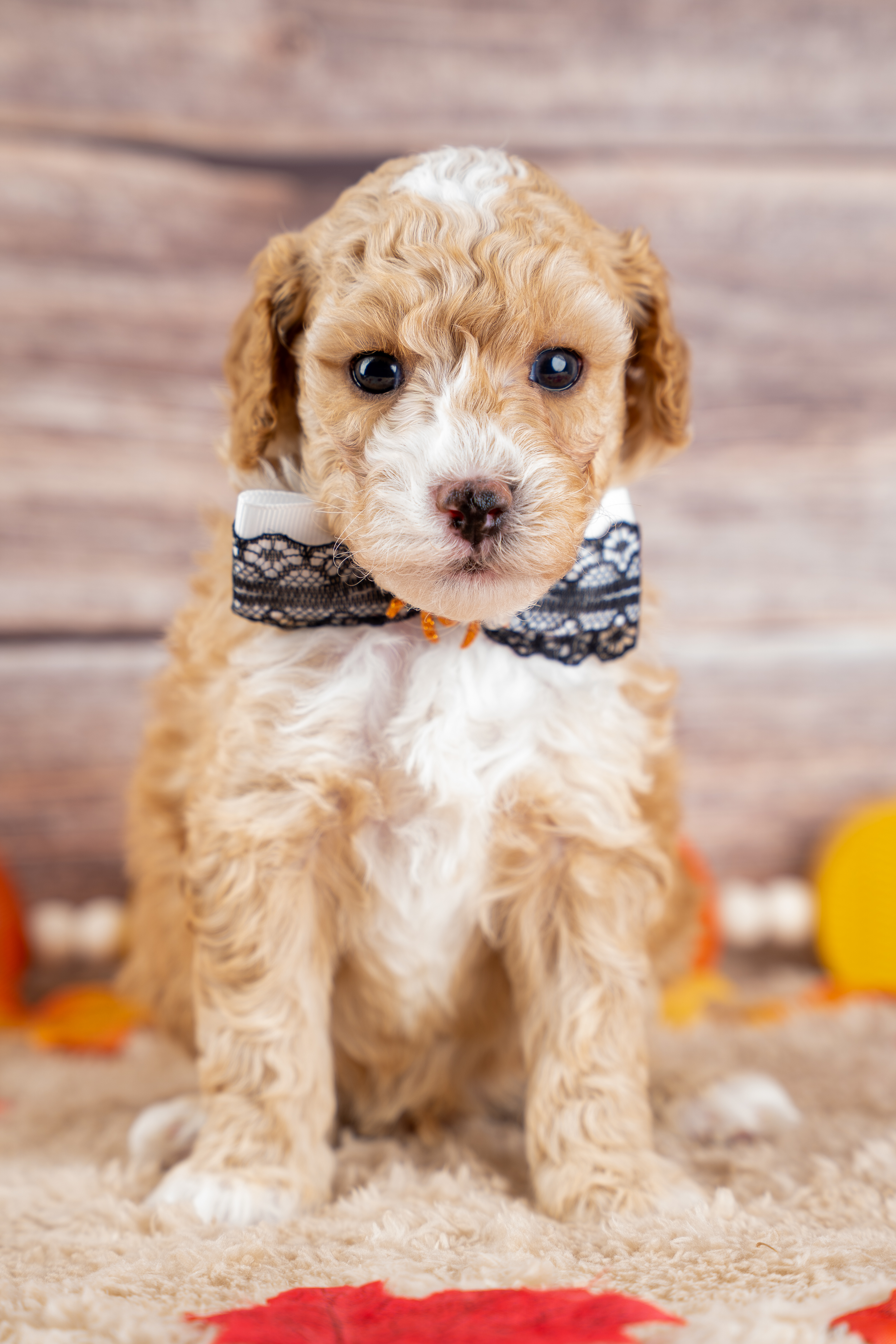
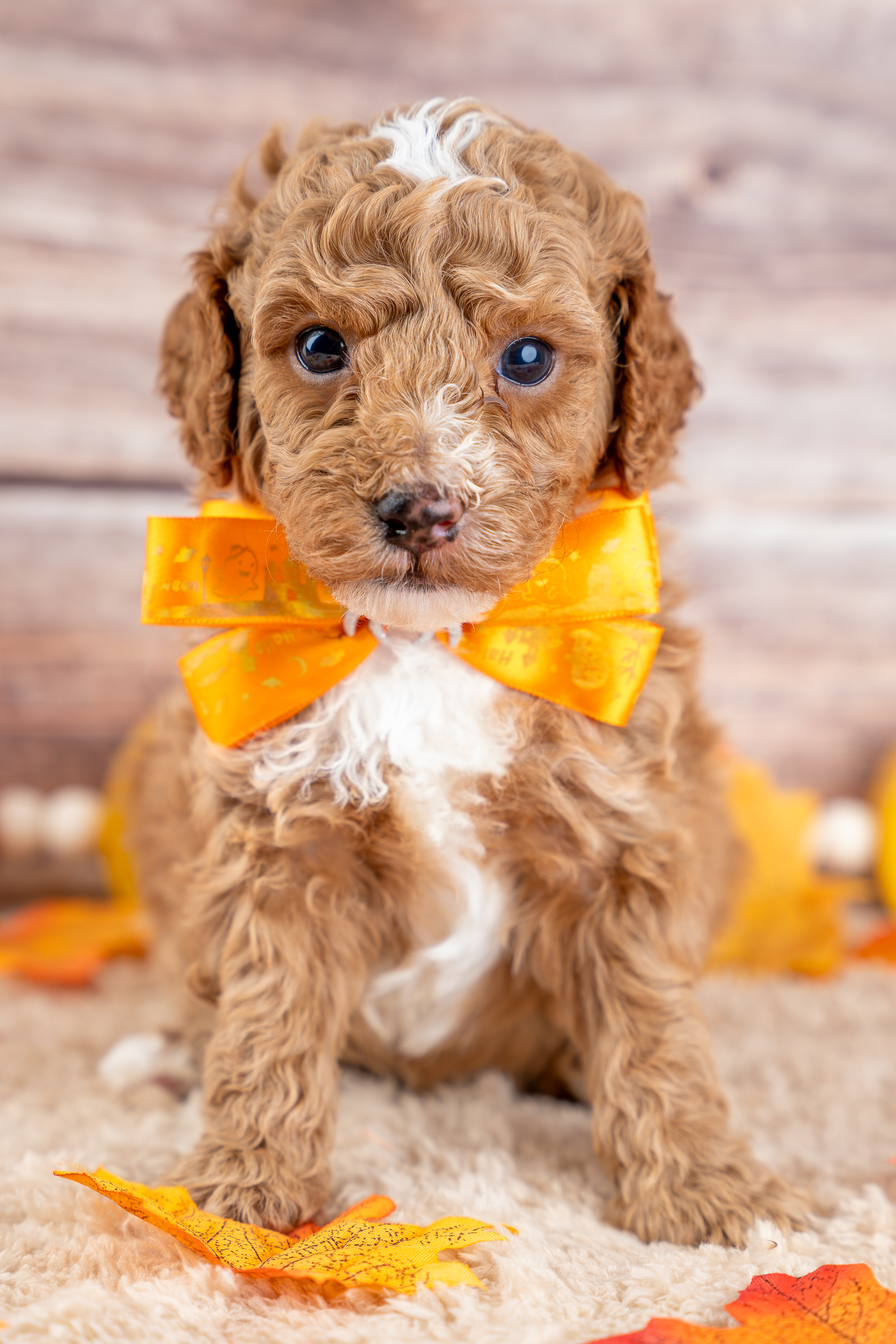
Two puppies from the same Poodle litter, photographed the same week. Same parents, same house, same routine, and still two different puppies.
What a breeder sees that a visit can't
By go-home day, we've handled every puppy every day since birth. Here's what I'm watching over those weeks:
- How each puppy handles being handled. ENS starts on day three. Even then, some puppies melt into your hands and others squirm, and those tendencies change over the following weeks.
- How they recover from sound. Our puppies hear everyday noises on purpose as part of sound desensitization. Who startles matters less to me than who checks it out and goes back to playing, and how long that takes.
- How they play with littermates. Who backs off when a sibling yelps, who keeps pushing, who plays with everyone, who has one favorite.
- How they settle. How easily each puppy settles in a crate, after play, and on a lap.
- How they handle new things. A new toy, a new surface, a new person: do they approach, wait, or retreat?
- How they change. A puppy who was timid at four weeks can be fearless at seven. That's exactly why we wait to make matches.
Describe your life honestly
The most useful thing a family can give a breeder isn't a wish list. It's an accurate picture. When we help families choose, these answers matter most:
- How much activity can you give every day, realistically, in February as well as in June?
- Who lives in the house? The ages of any kids, other dogs or cats, and frequent visitors.
- How many hours will the puppy be alone on a typical weekday once life settles down?
- How loud and busy is the house? Is it a quiet home, or one with a lot going on?
- Is this your first dog?
- What would you find hardest: a velcro dog who follows you everywhere, or an independent dog who's happy alone in another room?
- What's the dog's main job? A hiking partner, a lap dog, a kids' companion, a calm presence for an older parent?
Families sometimes shade these answers toward who they hope to be. Please don't. A good match is made for the household you actually have.
What matters less than people think
- Coat color and markings. They're the reason many families fall for a particular puppy, and they tell you nothing about temperament. If color is a must-have, say so early. Just know it narrows your choices for temperament.
- Who runs to you first. See above.
- Sex. In my experience, the differences between individual puppies are bigger than the differences between males and females.
- Size within the litter. Puppies in the same litter can grow into different adult sizes, and birth size doesn't reliably predict that. We give our best estimate for each puppy, but it's an estimate.
Health is a different matter, and it isn't something to judge by eye on a visit. Look for a breeder who health tests the parents and has every puppy examined by a veterinarian before go-home, and ask to see both.
How choosing works at Country Lane Doodles
We have two routes, and neither one involves a numbered pick order:
- Puppies already listed on our available puppies page are reserved first come, first served, on that specific puppy. Each puppy's page has photos, and often video and notes on personality, and you're welcome to ask us anything about a puppy before you reserve.
- Upcoming litters take a deposit that reserves your place in that litter, not a specific puppy. Choosing happens after the puppies are born, once we've been able to evaluate the litter, and we'll guide you toward the puppies we think fit your family and tell you why. Our post on how reserving a puppy works has the details.
Either way, the questions above are worth answering before you choose. If you're weighing whether an older, partly trained puppy suits you better, this post on pre-go-home training covers the trade-offs. If you're looking for a puppy raised with this much attention to who each one is, see our upcoming litters or start with an adoption application so we can get to know your family.
About the author. Sara raises Bernedoodle and Poodle puppies in her home in Erda, Utah, using Puppy Culture and Badass Breeder protocols from birth to go-home day. Before she started breeding, she spent years working in a veterinary hospital. More about Sara and Country Lane Doodles.