
Bringing Your Puppy Home in Utah: Pickup Options and the First 48 Hours
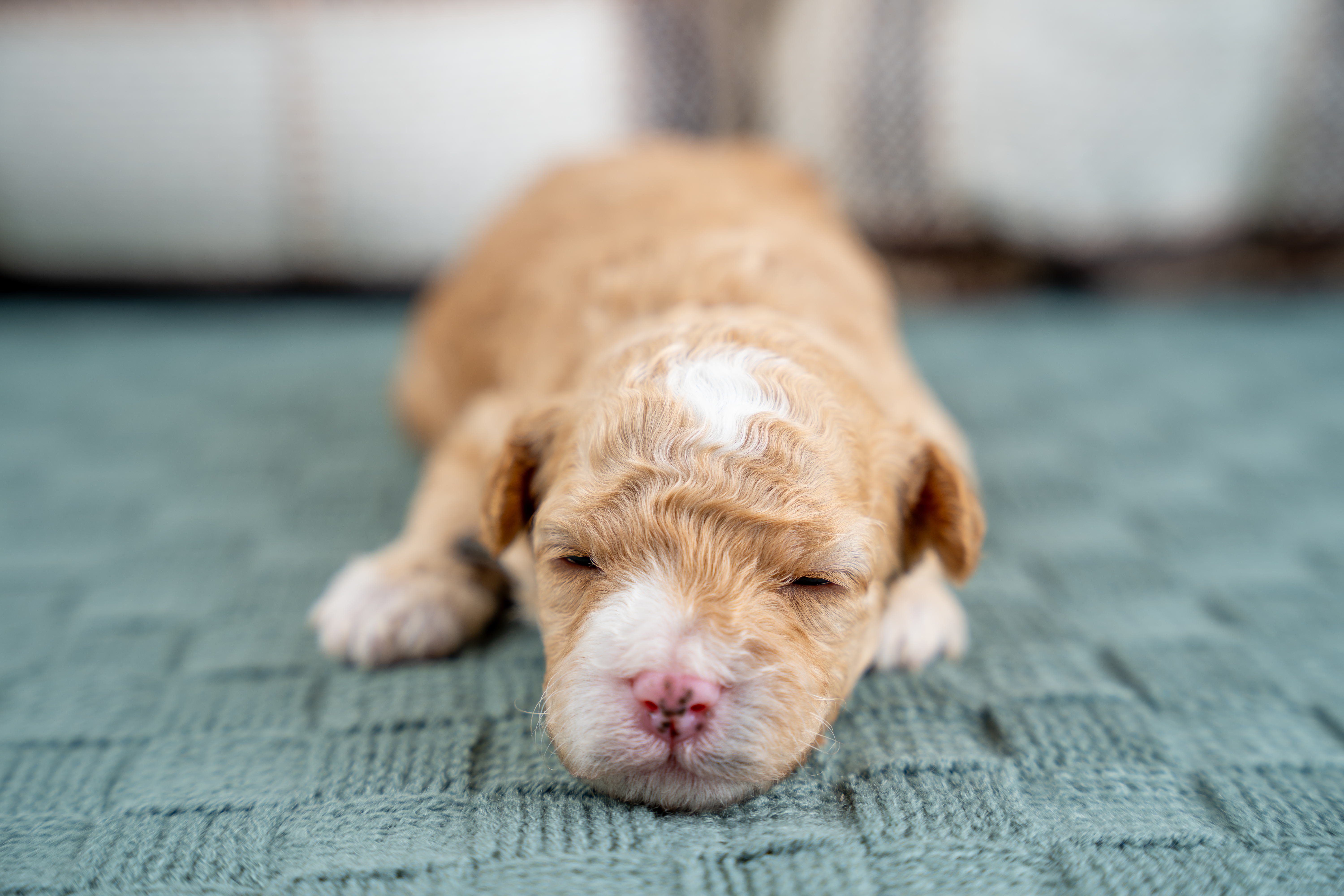
Go-home day is the part families ask us about most, right after "how big will he get?" Here's exactly how pickup works with us, and what the first two days at home usually look like — including the parts nobody warns you about.
How your puppy gets to you
We offer three options, and we'll sort out which one fits when your puppy is reserved:
- Meet in Salt Lake County. We meet at an agreed safe public location. Most Utah families choose this.
- Salt Lake City airport. Convenient if you're flying in to collect your puppy yourself.
- Flight nanny. For out-of-state families, a nanny accompanies your puppy in the cabin, for a fee. Several of our families in other states have used this and found it smooth.
We don't do pickups at our home. It isn't about being unfriendly — our litters are raised inside our house alongside young puppies whose immune systems are still developing, and limiting visitors is part of keeping them healthy.
Before go-home day: what to have ready
- A crate with a divider, so it grows with your puppy
- An exercise pen or a puppy-proofed room
- The same food your puppy has been eating (we send some home with you)
- Collar, harness, and a light leash
- An enzymatic cleaner — not a regular one, which leaves scent markers that invite repeat accidents
- Chew toys, and a couple of puzzle toys for rainy days
Our puppy supplies list has the specific items we use ourselves.
The first 24 hours
Go straight home. Skip the pet store, skip the in-laws. Your puppy has just left their mom, their littermates, and the only home they've known. One new environment is enough for one day.
Activate your Trupanion coverage. Every puppy comes with 30 days of free Trupanion pet insurance, but it must be activated within 24 hours of go-home. Do it before you get distracted — it's the single most time-sensitive thing on your list.
Keep it boring. Show your puppy the potty spot, the water bowl, the crate. Let them explore one room. Resist inviting the neighbourhood over — that can wait a week.
Expect a rough first night. Your puppy has slept in a pile of warm siblings every night of their life, and the first night alone is genuinely hard for them. Put the crate beside your bed. Use the blanket we send home, which carries their littermates' scent. Take them out for a potty break partway through the night.
Crying in the crate isn't a training failure. It's a puppy who has never been alone before. It gets dramatically better within a few days.
Day two
Start the potty routine properly. Take your puppy out after waking, after eating, after playing, and every hour or two in between. Go to the same spot, wait, and reward the moment they finish — not when you get back inside. Accidents are normal for weeks.
Watch their appetite and stools. Some softness from stress and a new environment is common. Refusing food entirely, repeated vomiting, or lethargy is not — call your vet, and tell us.
Book your vet visit. Most guarantees, ours included, ask that a new puppy is seen by a veterinarian within a few days of go-home. It also gives you a baseline and a relationship before you need one urgently.
Begin crate rest, on purpose. New owners often let an excited puppy go until they collapse. Eight-week-old puppies need around 18 to 20 hours of sleep a day, and an overtired puppy behaves like an overtired toddler — biting, frantic, unable to settle. Scheduled naps in the crate prevent most of what people call "bad behaviour" in week one.
The first week
- Keep socialization safe. Before their vaccination series is complete, avoid dog parks and pet store floors. Carry your puppy places, invite healthy vaccinated dogs over, let them meet people at home.
- Handle them daily. Paws, ears, mouth, tail. It makes grooming and vet visits enormously easier later.
- Book a groomer introduction for around 12 to 16 weeks — a short, positive first visit before they need a full coat trim.
- Start name recognition and simple recall in the house. Five minutes at a time is plenty at this age.
Our puppy care guide goes week by week from here.
When to call us
Anytime. Truly. We've had families text at 11pm about a puppy who wouldn't settle, and families check in three years later about grooming. Lifetime support isn't a marketing line for us — we want to know how these puppies turn out.
If you're still deciding on a puppy, our FAQ answers the practical questions, and you can ask Sara anything before you apply.